
In a world where sustainability is increasingly at the forefront of our minds, finding innovative ways to repurpose everyday items is more important than ever. Empty toilet paper rolls, often overlooked and discarded, offer a treasure trove of creative and practical uses. This article explores eight unique applications for these cardboard cylinders, transcending the typical craft projects often associated with them. From garden aids to home organization solutions, discover how these humble rolls can be transformed into useful, eco-friendly tools.
Seed Starter Pots

Empty toilet paper rolls serve as excellent biodegradable seed starter pots, offering an eco-friendly solution for gardeners. By cutting and folding the bottom of the roll, one can create a sturdy base to fill with soil and plant seeds. The cardboard decomposes naturally when planted in the garden, eliminating the need for plastic pots and promoting healthy root growth. This method not only recycles the rolls but also gives seedlings a strong start in their journey toward becoming flourishing plants.
The ease and efficiency of using toilet paper rolls for this purpose make it a favorite among sustainable gardening practices. Gardeners can write directly on the cardboard to label their plants, adding an element of organization to their gardening process. As the rolls break down, they contribute to the soil’s health, enhancing moisture retention and providing a natural fertilizer. This approach not only nurtures the garden but also aligns with principles of waste reduction and environmental stewardship.
Cord Organizers
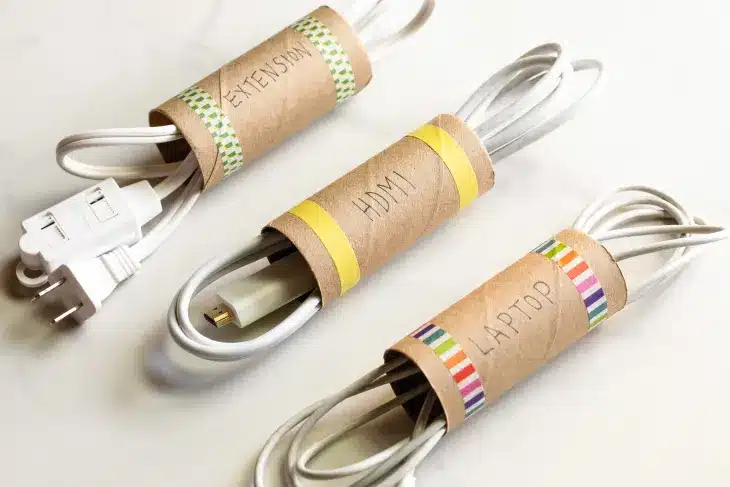
In the digital age, managing a myriad of cords and cables can be a hassle. However, empty toilet paper rolls offer a simple and effective solution for keeping cables organized and tangle-free. By coiling a cord and slipping it inside a roll, individuals can easily prevent knots and damage to their cables. This method is particularly useful for storing unused chargers, earphones, and other electronic accessories, making them readily accessible and neatly stored.
To enhance functionality, consider decorating and labeling each roll for easy identification of its contents. Whether using markers, washi tape, or stickers, personalized touches can turn ordinary rolls into vibrant and practical cord organizers. This not only aids in decluttering and organizing spaces but also repurposes waste materials into useful items, contributing to a more sustainable lifestyle.
Custom Pen Holders

Creating a custom pen holder from empty toilet paper rolls is not only a practical storage solution but also a fun way to add a personal touch to any workspace. By decorating rolls with paint, fabric, or decorative paper, one can design a unique organizer for pens, pencils, and other small tools. This DIY project not only repurposes the cardboard rolls but also helps to keep desks tidy and accessories at hand.
For those needing more extensive storage, stacking and gluing several rolls together can form a larger, multi-compartment organizer. This adaptable design allows for the creation of a customized storage unit that can accommodate a variety of items, from art supplies to office essentials. Such projects not only foster creativity but also encourage the repurposing of materials, aligning with eco-friendly practices.
Artistic Wall Decor

Transforming empty toilet paper rolls into artistic wall decor is a testament to the limitless potential of repurposing everyday items. By cutting the rolls into strips and arranging them into patterns, one can create intricate designs that range from floral motifs to geometric shapes. These creations can be painted in a variety of colors to match any room’s decor, turning what would be waste into a stunning focal point. This approach not only recycles the cardboard rolls but also offers a budget-friendly alternative to store-bought art, allowing for personal expression and customization.
The process of making wall decor from toilet paper rolls encourages creativity and can be a fun activity for individuals or families. Experimenting with different assembly techniques and color schemes can result in truly unique pieces that reflect personal style and artistic vision. Moreover, this DIY project promotes environmental sustainability by repurposing materials that would otherwise end up in landfills. The satisfaction of crafting something beautiful and functional from simple materials highlights the joy and value found in upcycling.


